
Finance Minister Nirmala Sitharaman announced that the Goods and Services Tax (GST) Council's October 7 meeting will focus on 'GST 2.0' process reforms, including e-invoicing and input tax credit rules, while also addressing complex issues surrounding the taxation of the digital economy and cryptocurrency.

A new report indicates India has become the world's fifth most digitalised economy and ranks fourth globally in AI performance, driven by increasing AI adoption and a strong digital infrastructure.

Former NITI Aayog vice-chairman Rajiv Kumar has urged the government to maintain zero-fee UPI transactions for several more years, arguing that the benefits of UPI as a public good outweigh the costs. This comes amidst the government's recent decision to introduce a 0.4% fee on person-to-merchant UPI transactions above Rs 2,000 from October 15, a move that has drawn criticism.

India's digital economy is projected to constitute nearly 20 per cent of the nation's GDP by 2030, fuelled by a growth rate twice as fast as the overall economy, according to a senior government official.

The Unified Payments Interface (UPI) has completed a decade since its launch, becoming the backbone of India's digital payments ecosystem. It has seen exponential growth in transaction volume and value, expanding financial inclusion and setting a global benchmark for real-time payments.

Trai Chairman Anil Kumar Lahoti highlighted the transformative role of satellite communications in expanding seamless connectivity across India, especially in remote areas. He noted that India's space economy is projected to grow significantly, driven by satcom technology that will bridge the digital divide, provide resilient infrastructure during disasters, and support strategic sectors.
Trai Chairman Anil Kumar Lahoti highlighted the transformative role of satellite communications in expanding seamless connectivity across India, especially in remote areas. He noted that India's space economy is projected to grow significantly, driven by satcom technology that will bridge the digital divide, provide resilient infrastructure during disasters, and support strategic sectors.

Despite near gender parity in basic bank account ownership, women in India remain significantly underrepresented in the growing platform economy due to gaps in digital financial capability and access to credit, according to a joint report by the International Labour Organization and National Council of Applied Economic Research.

'What we are seeing today is India stepping into its digital confidence, not as a follower but a leader.'

Prime Minister Narendra Modi celebrated 11 years of the Digital India initiative, highlighting its role in redefining governance, empowering citizens, and accelerating all-round development. He emphasised its impact on digital payments, direct benefit transfers, and expanding digital public infrastructure, making technology a powerful instrument for 'Ease of Living' across India, including tier-2 and tier-3 cities.

Experts laud the decision to impose a 0.4 per cent Merchant Discount Rate (MDR) on UPI transactions exceeding Rs 2,000, effective October 15. This move, along with a dedicated fund for small merchants, is seen as crucial for creating a sustainable digital payments ecosystem, incentivising expansion in rural areas, and funding innovation while keeping most transactions free for users.

A NITI Aayog report indicates that India's digital public infrastructure (DPI) initiatives are projected to contribute significantly to the nation's GDP, potentially reaching 4 per cent by 2030.
A NITI Aayog report indicates that India's digital public infrastructure (DPI) initiatives could contribute 4 per cent of the GDP by 2030, a significant increase from the current 1 per cent.

PhonePe, at the Global Fintech Fest 2026, unveiled its strategic vision for the next decade, focusing on inclusive digital progress for individuals, households, and businesses across India. The roadmap details innovations in financial inclusion, wealth creation, credit access, and merchant solutions.

Minister of State for Telecom Chandra Sekhar Pemmasani urged BRICS nations to collaborate on building institutional capacity and advocating for fair standards in international telecom and ICT bodies. He highlighted India's willingness to share its modular, open-source digital public infrastructure frameworks like Aadhaar and DigiLocker, emphasising their role in sustainable development and economic growth across the Global South.

India's Unified Payments Interface (UPI) recorded an unprecedented 24.51 billion transactions valued at Rs 29.8 lakh crore in August, largely propelled by the Raksha Bandhan festival. This surge marks a 22% annual increase in volume and 20% in value, highlighting the expanding reach and depth of the UPI ecosystem. Experts anticipate further growth during the upcoming festive season, while UPI's international acceptance now spans 11 countries.

Arundhati Bhattacharyya, Salesforce President and CEO for South Asia, highlighted how cloud and AI are democratising capabilities, offering India a unique opportunity to leapfrog in the technology revolution. Speaking at the IMC Chamber of Commerce, she emphasised that AI will create more jobs by addressing unmet business demands and could significantly boost India's GDP, with NITI Aayog estimating a USD 500-600 billion addition by 2035. She urged Indian businesses to transform using technology, focus on data, redesign work, and invest in skills, stressing that AI is not just for large corporations.
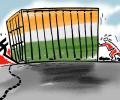
The United States and the European Union have strongly criticised India's trade policies at the World Trade Organization review, highlighting concerns over high tariffs, quality-control orders (QCOs), and restrictions on digital trade and services, which they argue undermine India's economic openness.

Fuel pump dealers in Madhya Pradesh plan to stop accepting UPI payments exceeding Rs 2,000 for petrol and diesel from October 16, citing concerns over the proposed Merchant Discount Rate (MDR). The Confederation of All India Traders (CAIT) has urged the government to reconsider the MDR imposition, warning it could hinder digital payment adoption and impact traders' profits.
A joint report by Deloitte India and FICCI projects India's consumer economy to reach USD 1.9 trillion by 2030. This growth will be fuelled by rapid AI adoption, evolving consumer preferences, and new commerce models like e-commerce and quick commerce. India leads in AI adoption among top countries, with businesses leveraging it for engagement, innovation, and forecasting. The report also highlights the emergence of a new Indian consumer seeking convenience and transparency, and identifies key trends shaping FMCG, retail, and e-commerce sectors.

Arundhati Bhattacharya, Salesforce President and CEO for South Asia, stated that cloud and AI are democratising capabilities, offering India a unique opportunity to leapfrog in technology. Speaking at the IMC Chamber of Commerce, she emphasised that AI will create more jobs and urged Indian businesses to transform using technology, rather than merely digitising. She also highlighted the significant economic potential of AI adoption for India.

J R D Tata, chairman of the Tata group from 1938 to 1991, said that whenever he had to make a difficult decision, he would ask himself, what will be good for India, and what will be good for the Tatas. If he had a doubt, he would decide in favour of India. In the long run, it would turn out well for the Tatas too, he said, points out Arun Maira.

For India, the goal is not simply to host another grand diplomatic gathering. It is to prove that a diverse coalition of emerging powers can still deliver.

Digital money is gradually starting to behave like software. It's no longer inert -- sitting passively in accounts. In the not-so-distant future, your money could become 'smart' and 'active,' understanding your preferences, paying your bills automatically, optimising your returns, and managing your risks -- all without you having to manage the details.

India's economy is projected to lose momentum in the second half of fiscal 2026-27, with tighter financial conditions, elevated energy prices, and broadening inflation pressures posing significant risks, according to DBS Bank economist Radhika Rao.

'It's A Cat And Mouse Game.'

The Indian government has clarified that consumers will not be charged for UPI transactions, and most merchant transactions will also remain free. This comes amidst speculation following an amendment to the Payment and Settlement Systems Act, 2007. Any future merchant discount rate (MDR) would be nominal, threshold-based, and aimed at ensuring UPI's long-term sustainability and infrastructure development.

South African President Cyril Ramaphosa on Friday described BRICS as an important global forum, highlighting the grouping's growing demographic and economic weight and noting that its members account for around half of the world's population and 40 percent of global GDP.

Samajwadi Party president Akhilesh Yadav has criticised the BJP government's proposed Merchant Discount Rate (MDR) on high-value UPI transactions, calling it a "chungi" (tax) on digital payments. He alleged the move was an attempt to extract money from people's transactions, contradicting the government's goal of a trillion-dollar economy. The new UPI framework will impose a 0.4% MDR on person-to-merchant transactions above Rs 2,000 from October 15, with certain sectors having a flat Rs 5 MDR.

A new report by FICCI, BCG, and IBA outlines that India's banking sector must grow significantly faster than nominal GDP to support a USD 30 trillion economy by 2047, requiring banking assets of USD 45 trillion. The report highlights the sector's current strength, challenges in digitisation, and the need to enhance resilience against fraud and cyber threats, proposing a 13-point agenda for stakeholders.

India is actively integrating payment system harmonisation into its Free Trade Agreement (FTA) negotiations, especially with countries hosting a large Indian diaspora. This strategy aims to leverage India's growing fintech ecosystem, facilitate cross-border financial services, and position India as a global hub for financial services exports, particularly through platforms like GIFT City.

Dark patterns are no longer just a consumer protection concern, but a broader macroeconomic challenge affecting the long-term sustainability of India's digital commerce ecosystem.

Tax experts clarify that merchants will pay 18% GST on Merchant Discount Rate (MDR) for UPI payments exceeding Rs 2,000, effective October 15. However, registered merchants can claim Input Tax Credit (ITC), mitigating the tax burden. This move is expected to generate significant GST revenue for the exchequer while funding payment infrastructure.

If India does get $100 billion a year in FDI, it would be a game-changer in every possible way. FPIs would come rushing back, AI or no AI, points out Debashis Basu.
Prasar Bharati Chairman Prasoon Joshi voiced concerns over AI's impact on India's cultural heritage, including music and endangered languages, advocating for human-AI collaboration. Meanwhile, a Spotify report revealed significant growth in royalties for Indian artists, with linguistic diversity driving economic strength in the creative industries, highlighting the platform's role in enabling talent across various Indian languages.

India's consumer digital economy which was pegged at $85-90 billion in calendar year 2020, is expected to become a $800 billion market by 2030, according to reports released by consulting firm RedSeer at its flagship event Ground Zero 5.0. The digital economy includes 60 per cent of travel, 40 per cent non-grocery retail, 30 per cent of education, 25 per cent of food and beverages services and 6 per cent of pharma/grocery going through digital channels by calendar year 2030. Online retail is set to become the third-largest market by scale by CY30 with an annual gross merchandise value (GMV) of $350 billion in CY30, said RedSeer.

Merchants will be subject to an 18 per cent Goods and Services Tax (GST) on the Merchant Discount Rate (MDR) for UPI payments exceeding Rs 2,000, but can mitigate this burden by claiming input tax credit (ITC), according to tax experts.
The NCP (SP) has demanded a complete rollback of the 0.4 per cent Merchant Discount Rate (MDR) on UPI transactions above Rs 2,000, effective October 15. The party termed the move a "direct assault" on small traders and shopkeepers, accusing the Modi government of "double standards" by burdening small merchants while large industrialists benefit from loan write-offs.

The Central Board of Indirect Taxes and Customs (CBIC) is set to significantly increase its use of artificial intelligence (AI), machine learning (ML), and real-time analytics in Customs processes, aiming for a near-touchless, near-digital clearance experience, according to Chairman Vivek Chaturvedi.
The third edition of the Viksit Bharat Young Leaders Dialogue (VBYLD) has commenced with a quiz contest, leading to a national finale in January 2027 where young leaders will present their ideas for a developed India to Prime Minister Narendra Modi. The multi-stage event includes essay challenges, district championships, and state-level dialogues, aiming to foster youth participation in nation-building across various thematic areas.
